Are Our Thoughts Truly Private?


I recently came across a social media meme showing a bitter-looking Barbie doll with the caption:
"I'm grateful that thoughts don't appear in bubbles above my head."
At first, it made me smile. Then it made me think.
What if they do?
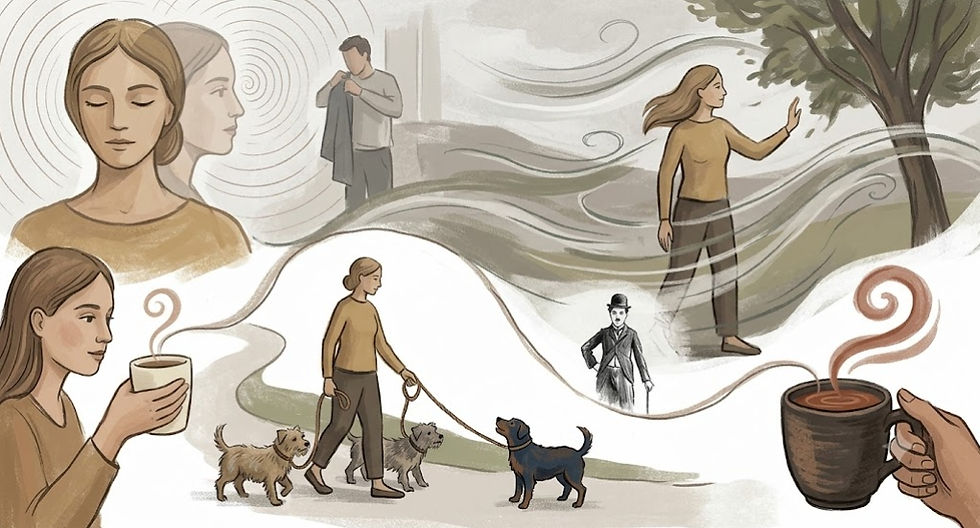
Not as words floating above us for everyone to read, but in another way. What if our thoughts are constantly expressing themselves through our energy, our presence, our body language, and the subtle signals we send into the world?
Most of us live as though our thoughts are private. We assume that as long as we don't say something out loud, nobody knows what is happening inside us. Yet anyone who has spent enough time around people knows there is something more going on.
Have you ever walked into a room and immediately sensed tension without anyone saying a word?
Have you ever met someone who radiated warmth and kindness before introducing themselves?
Or perhaps you've been around someone who appeared perfectly polite on the surface, yet something felt off that you couldn't quite explain.
We often dismiss these experiences because they don't fit neatly into logic. We tell ourselves we are imagining things. Yet nearly everyone has experienced them.
Human beings are incredibly sensitive. We pick up on facial expressions, posture, tone, breathing patterns, and countless subtle cues without consciously realizing it. Whether you see this as psychology, intuition, energy, or a combination of all three, the result is the same: what is happening inside us often reaches others long before our words do.
This realization carries an important lesson.
If our inner world affects the people around us, then our thoughts matter more than we may realize.
That doesn't mean we should judge ourselves for every negative thought that passes through our minds. Everyone experiences fear, frustration, anger, and doubt. We are having a human experience. Thoughts come and go like clouds passing through the sky.
The deeper question is what thoughts we choose to feed.
What attitudes are we rehearsing every day?
What stories are we telling ourselves?
What emotional atmosphere are we cultivating within?
Over time, those patterns become part of our presence. They shape the way we speak, the way we listen, the way we react, and the way others experience us.
Children seem especially sensitive to this. Anyone who has spent time with young children knows they often react to what people are feeling rather than what they are saying. Animals can be the same way. A dog may trust one person immediately and remain cautious around another. They are responding to something beyond words.
This doesn't mean we should become paranoid about our thoughts or strive for impossible perfection. It simply means becoming more conscious of the inner environment we create.
Just as we care about the atmosphere in our homes, we can learn to care about the atmosphere within ourselves.
A mind filled with resentment tends to spread resentment.
A mind filled with fear tends to spread fear.
A mind filled with peace tends to create peace around it.
Whether you call it energy, presence, vibration, attitude, or emotional influence, it is difficult to deny that what we carry inside affects the world around us.
Perhaps thoughts do appear in bubbles above our heads after all.
Not in words that people can read, but in a language that everyone can feel.
And if that is true, then every thought we nurture becomes part of the energy we offer to the world.
Nurit


Comments